things to do in Calais
The Best Things to do in Calais

Things to do in Calais : Everything you need to see

Calais has much more to offer than many people expect – here’s look at the highlights:

The Coastline and Beach

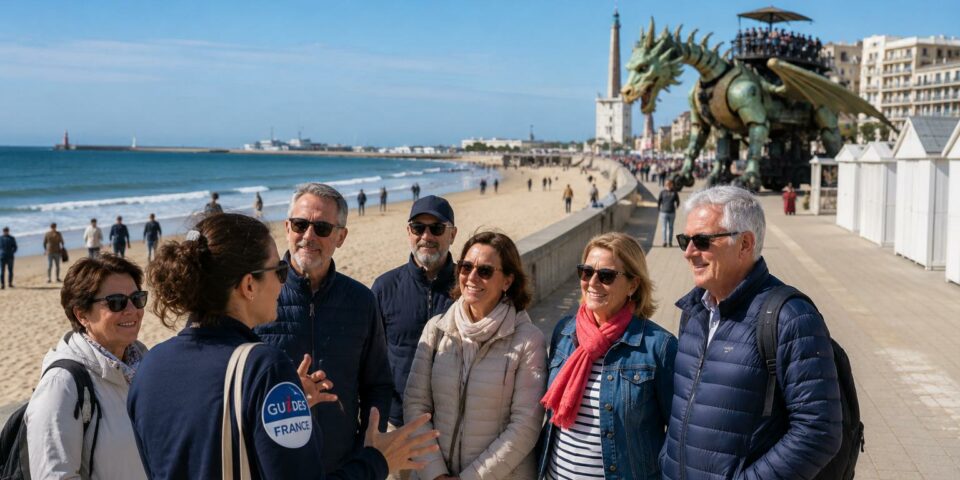
Calais sits on the Strait of Dover, the narrowest point between France and England, making its coastline one of the most distinctive in Europe. The city’s broad sandy beach stretches for several kilometres and is backed by a modern promenade that’s ideal for walking, cycling, or simply watching ships cross one of the world’s busiest shipping lanes. Unlike many Mediterranean beaches, Calais has wide tidal flats that dramatically change throughout the day, creating beautiful reflections and excellent opportunities for photography.

The seafront has been extensively redeveloped in recent years with landscaped dunes, wooden boardwalks, playgrounds, cafés, and plenty of seating areas. It’s a pleasant place for families, joggers, and anyone looking for a relaxed atmosphere away from larger French seaside resorts.

On exceptionally clear days, the famous White Cliffs of Dover are visible just 34 kilometres across the Channel. Sunset is particularly rewarding, with ferries, cargo ships, and sailing boats silhouetted against colourful skies. Birdwatchers also appreciate the area, especially during spring and autumn migrations when thousands of seabirds pass through the Channel.

The Calais Dragon (Dragon de Calais)

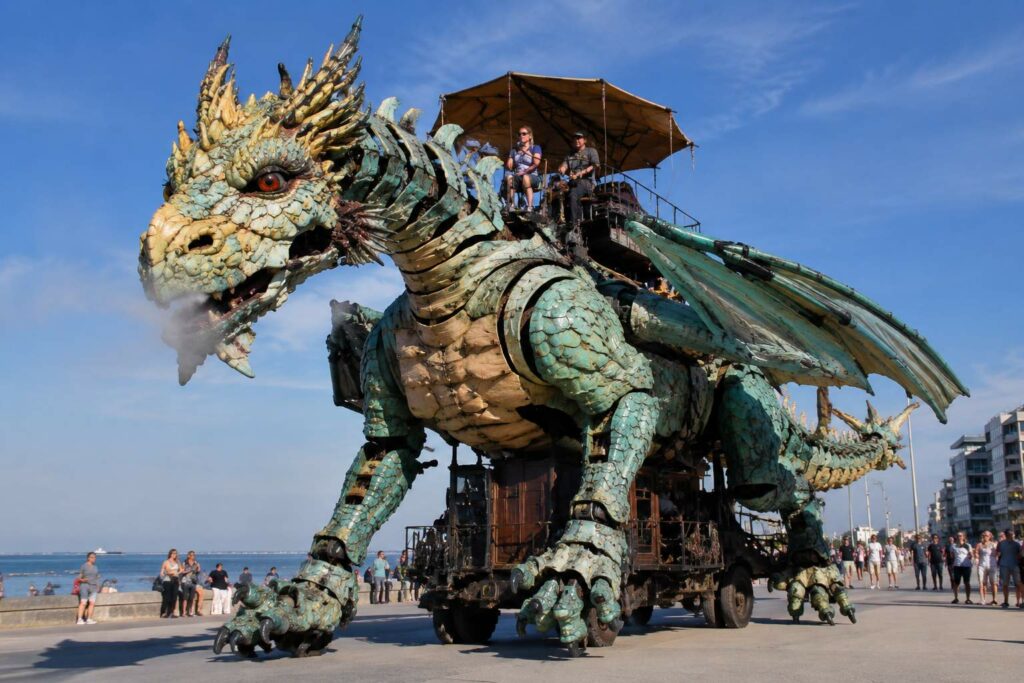
Perhaps Calais’ most iconic modern attraction is the Dragon de Calais, an extraordinary mechanical creature created by the French artistic company La Machine, known for giant moving machines in cities like Nantes and Toulouse. Standing around 10 metres tall and weighing approximately 72 tonnes, the dragon walks along the seafront with astonishing realism. Its head turns, eyes blink, wings move, and it even breathes fire and water during performances.

Visitors can simply watch the dragon roam the promenade for free, but the most memorable experience is buying a ticket to ride on its back. During the journey, passengers climb aboard a viewing platform where they enjoy elevated views of the coastline while the dragon slowly walks through the dunes and along the beachfront.

Lace and Fashion Museum (Cité de la Dentelle et de la Mode)

For centuries, Calais was synonymous with luxury lace. During the nineteenth century, skilled workers and specialised weaving machines transformed the city into one of the world’s leading producers of fine lace used by prestigious fashion houses across Europe. Today, that heritage is preserved in the Cité de la Dentelle et de la Mode, housed in a beautifully restored former lace factory.

The museum combines industrial history, fashion, craftsmanship, and design. One of the highlights is watching enormous nineteenth-century Leavers lace machines in operation. These remarkable mechanical looms are still capable of producing intricate lace patterns using techniques that remain difficult to replicate digitally.

Alongside the machinery, visitors explore exhibitions featuring haute couture garments incorporating Calais lace. Designers such as Chanel, Dior, Givenchy, and Alexander McQueen have all used Calais lace in their collections, demonstrating the continuing importance of the craft.

Seafood and Northern French Cuisine

Calais’ position on the English Channel naturally makes seafood a highlight of its culinary scene. Fishing boats land fresh catches including sole, sea bass, mackerel, scallops, shrimp, mussels, and oysters, many of which appear on restaurant menus within hours.

A classic local meal is moules-frites—fresh mussels steamed with white wine, cream, garlic, or local beer and served with generous portions of crispy fries. The nearby Opal Coast is also known for oysters and shellfish, while smoked fish remains a regional speciality.

Northern French cuisine reflects Flemish influences rather than Mediterranean traditions. Rich stews like carbonnade flamande, slow-cooked beef in beer, and waterzoï, a creamy chicken or fish stew, are comforting favourites, particularly during cooler months. Cheese lovers should sample local varieties from northern France, often accompanied by artisan breads and regional beers.

For dessert, try waffles, spéculoos biscuits, or tarte au sucre (sugar tart), all traditional treats from the region.

Leave a Reply

Your email address will not be published. Required fields are marked *

X