Monet's house and gardens
Claude Monet’s House and Gardens in Giverny: A Living Masterpiece

Monet's House and Gardens : A Living Masterpiece

Nestled in the picturesque village of Giverny in Normandy, Claude Monet’s House and Gardens are among France’s most beloved attractions. Every year, hundreds of thousands of visitors travel from around the world to discover the place where the father of Impressionism lived, painted, and created some of the most celebrated works in art history.

More than just a home, Giverny was Monet’s greatest masterpiece—a living canvas that he designed with the same care and creativity as his paintings.

Monet first arrived in Giverny in 1883 and immediately fell in love with the peaceful countryside. Surrounded by rolling fields and the gentle River Epte, he rented the property before eventually purchasing it in 1890. Over the next four decades, he transformed the modest farmhouse into a colourful family home and developed extraordinary gardens that would inspire his artistic vision until his death in 1926.

The Pink House

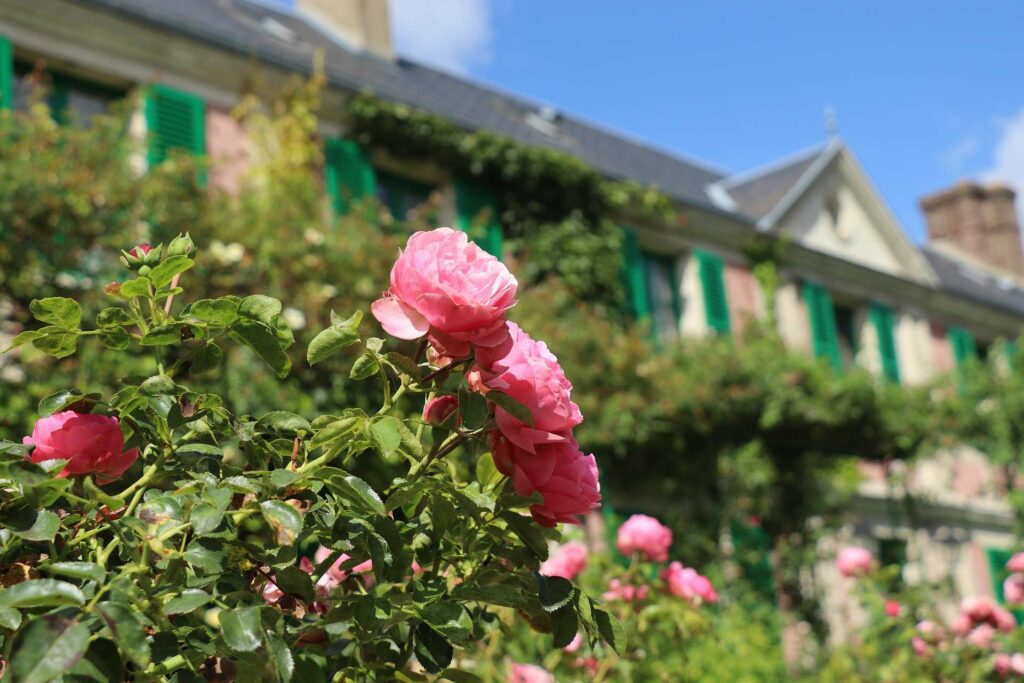
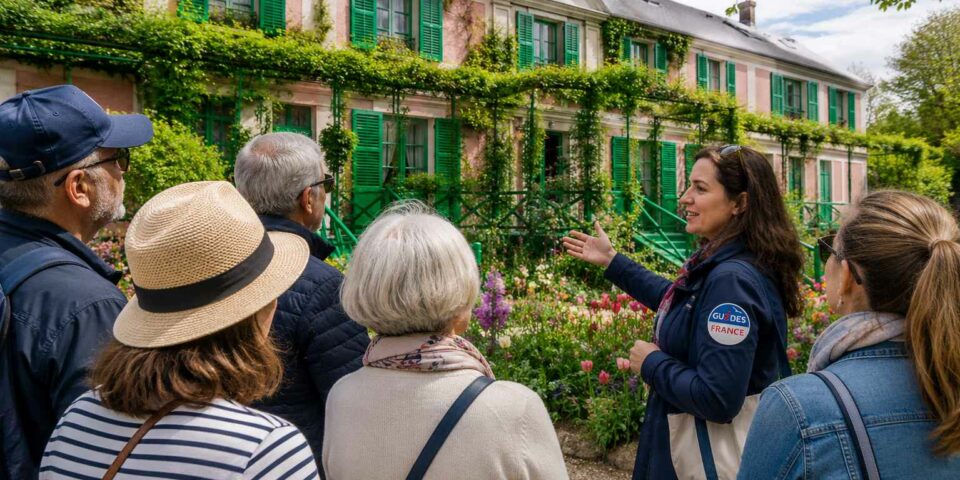
The house itself is a delight to explore. Painted a soft pink with distinctive green shutters, it reflects Monet’s cheerful personality and love of colour. Inside, visitors can wander through beautifully restored rooms, including the famous bright yellow dining room and the striking blue-tiled kitchen. Each room is filled with period furniture, family photographs, and an impressive collection of Japanese prints, revealing Monet’s fascination with Japanese art and culture. The home offers an intimate glimpse into the daily life of one of history’s greatest artists.

The Gardens

Outside, visitors discover two remarkable gardens, each with its own unique atmosphere:

Clos Normand

Located directly in front of the house, its a spectacular flower garden laid out with geometric paths and overflowing flower beds. Rather than arranging plants by traditional gardening rules, Monet carefully selected flowers for their colours, textures, and flowering seasons. Tulips bloom in spring, followed by irises, roses, peonies, delphiniums, sunflowers, dahlias, and countless other varieties that ensure the garden is vibrant from April until autumn. Every season offers a different palette, making no two visits exactly the same.

The Water Garden

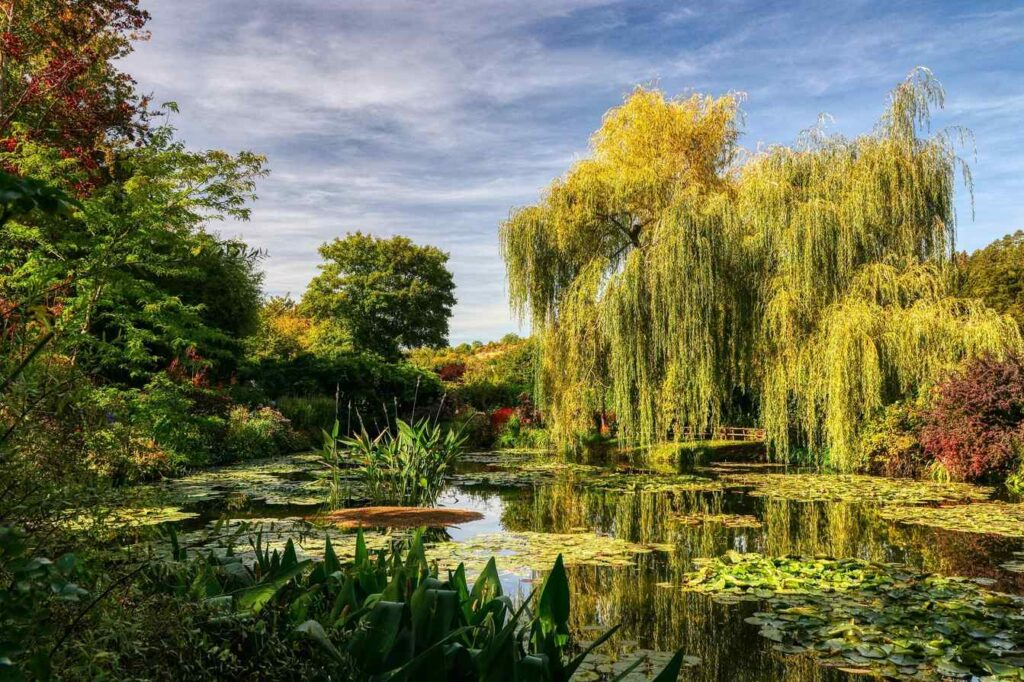
Perhaps the most famous part of the estate is the Water Garden. Inspired by Japanese landscapes, Monet diverted part of the River Epte to create a tranquil pond filled with water lilies. The instantly recognisable green Japanese bridge arches gracefully over the water, surrounded by weeping willows, bamboo, wisteria, and flowering shrubs. It was here that Monet found endless inspiration for his iconic Water Lilies series, producing more than 250 paintings that explored the changing effects of light, reflections, and the passing seasons. Today, standing beside the pond feels like stepping directly into one of his masterpieces.

The Lasting Legacy of Monet

Monet often said he owed his success as a painter to his flowers. Unlike many artists who searched for beautiful landscapes, Monet created his own. He constantly experimented with new plant combinations, imported rare species, and redesigned areas of the gardens to achieve the perfect harmony of colour. Gardening became as important to him as painting, and he employed a team of gardeners to help maintain his ambitious vision.

The gardens continue to be carefully preserved by the Fondation Claude Monet, which restores thousands of flowers every year according to Monet’s original planting plans. The result is an authentic recreation of the landscape that inspired some of the world’s most famous works of art. 

Leave a Reply

Your email address will not be published. Required fields are marked *

X