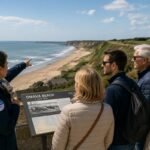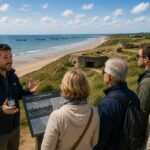
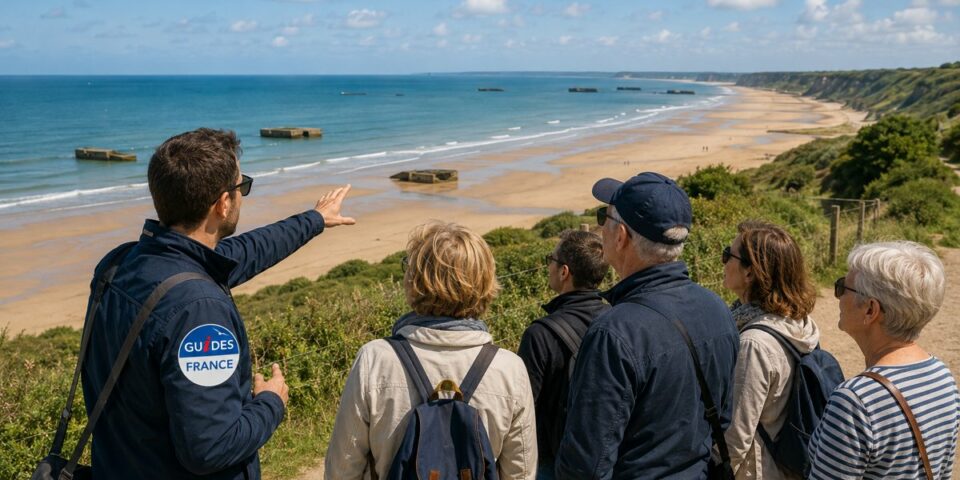
The Normandy D-Day Landing Beaches
The five Normandy Landing Beaches are among the most important historical sites in the world. On 6 June 1944, Allied forces launched Operation Overlord, the largest amphibious invasion in history, marking the beginning of the liberation of Western Europe during the Second World War. More than 156,000 American, British, Canadian, and Allied troops landed across nearly 80 kilometres of Normandy’s coastline, supported by thousands of ships and aircraft.
Today, the beaches remain places of remembrance, where visitors can walk the same sands crossed by Allied soldiers over 80 years ago. Along the coastline you’ll find museums, memorials, bunkers, cemeteries, monuments, and preserved battlefields that bring history vividly to life.
In July 2026, the D-Day landing beaches were finally inscribed on UNESCO’s World Heritage List. This includes the five D-Day beaches known by their code names: Utah, Omaha, Gold, Juno and Sword.
Whether you’re passionate about military history or simply wish to honour those who fought for freedom, visiting the Normandy Landing Beaches offers a moving and unforgettable experience. Exploring them with a private guide allows you to understand not only the military strategy but also the personal stories of courage, sacrifice, and resilience behind one of history’s most significant days.
Ohama Beach
Omaha Beach is the most famous and perhaps the most emotional of the five D-Day landing beaches. Stretching for approximately eight kilometres between Vierville-sur-Mer and Colleville-sur-Mer, it was assigned to the U.S. Army’s 1st and 29th Infantry Divisions during the Normandy invasion. The beach was heavily defended by German fortifications positioned high on the surrounding bluffs, making it one of the most difficult landing sectors on 6 June 1944.
As American troops approached the shore, they faced intense machine-gun fire, artillery bombardment, and numerous obstacles placed on the beach to destroy landing craft. Heavy casualties were suffered during the first hours of the assault, but through extraordinary courage and determination, Allied soldiers gradually broke through the German defences and secured the beach by the end of the day.
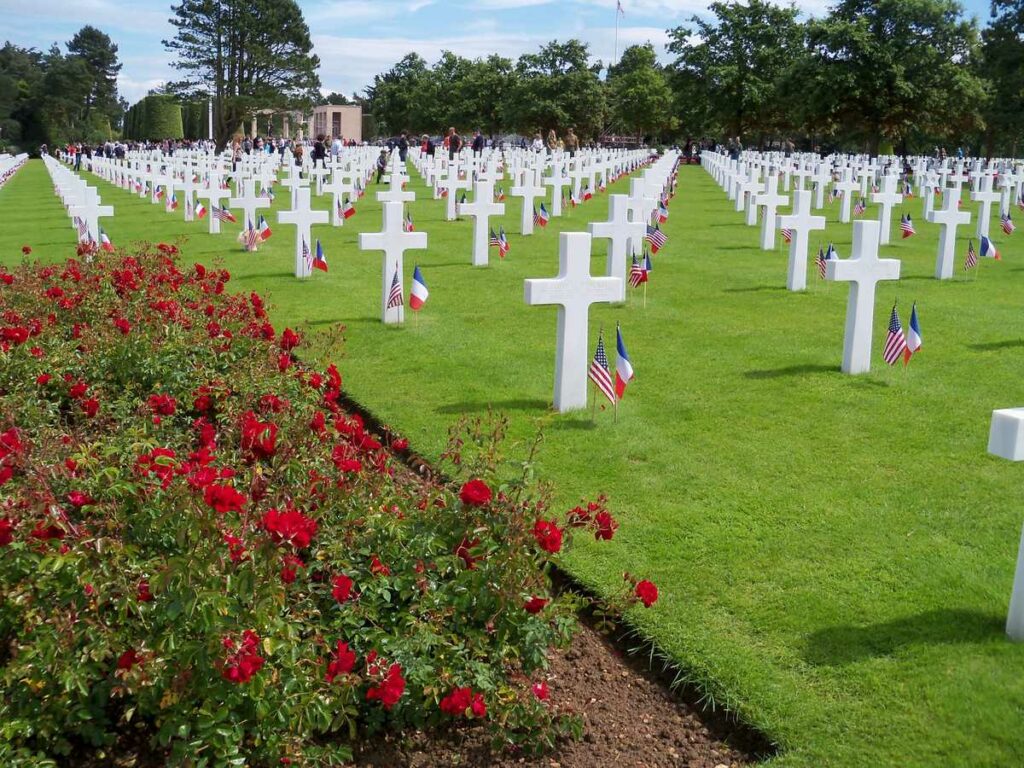
Today, Omaha Beach remains a place of quiet reflection. Visitors can walk along the vast sandy shoreline, where the famous sculpture Les Braves stands as a tribute to the soldiers who fought there. Nearby, the Normandy American Cemetery overlooks the beach, with more than 9,000 white marble headstones honouring those who gave their lives during the campaign. Several museums, memorials, and preserved German bunkers provide additional insight into the events of D-Day.
For many visitors, Omaha Beach is the highlight of a Normandy tour, offering a powerful combination of history, emotion, and remembrance that leaves a lasting impression
Utah Beach
Utah Beach formed the westernmost landing sector of the Allied invasion and was assigned to the U.S. 4th Infantry Division. Compared with Omaha Beach, the landing at Utah was considered one of the most successful operations of D-Day, thanks to favourable circumstances, detailed planning, and effective support from airborne troops who had landed inland during the night.
Strong currents caused the first assault waves to land approximately two kilometres south of their intended position. Fortunately, this unexpected landing placed American forces in an area with lighter German defences. Brigadier General Theodore Roosevelt Jr., who landed with the first wave despite walking with a cane, famously declared, “We’ll start the war from right here,” ordering troops to continue the assault from their new location.
Today, Utah Beach offers visitors an excellent opportunity to understand both the beach landings and the airborne operations that followed. The Utah Beach Landing Museum, built directly on the shoreline, features military vehicles, landing craft, aircraft, personal artefacts, and interactive exhibits explaining the invasion in detail.
The surrounding area also includes Sainte-Mère-Église, one of the first French towns liberated during D-Day, making Utah Beach an essential stop for anyone interested in the American contribution to Operation Overlord.
Gold Beach
Gold Beach was assigned to the British 50th (Northumbrian) Infantry Division and stretched between La Rivière and Arromanches-les-Bains. The British objective was to capture the beach, link with American forces to the west and Canadian troops to the east, and secure the important port facilities needed for the Allied advance into France.
Although German resistance was strong in places, British troops successfully cleared many defensive positions and advanced inland more rapidly than expected. Gold Beach also became closely associated with one of the greatest engineering achievements of the Second World War—the construction of the Mulberry Harbour at nearby Arromanches.
Because no major French port could immediately support the Allied invasion, engineers built an enormous artificial harbour using floating roadways, pontoons, and massive concrete caissons transported across the English Channel. Within days, thousands of vehicles, troops, and supplies were being unloaded through this temporary port, making it crucial to the success of the Normandy campaign.
Today, visitors can still see many of the huge concrete remains of the Mulberry Harbour offshore. The town of Arromanches offers excellent museums, panoramic viewpoints, and memorials explaining this remarkable feat of wartime engineering. Gold Beach perfectly combines military history with innovation, making it one of Normandy’s most fascinating destinations.
Juno Beach
Juno Beach was the landing sector assigned to the 3rd Canadian Infantry Division and remains one of Canada’s most important historical sites outside the country. Located between Gold and Sword Beaches, Juno presented numerous challenges, including sea walls, beach obstacles, mines, and heavily defended German strongpoints.
Despite suffering significant casualties during the initial assault, Canadian forces successfully overcame the beach defences and advanced further inland than any other Allied force on D-Day. Their achievements played a vital role in securing the Allied foothold in Normandy.
Today, Juno Beach is home to the Juno Beach Centre, the only museum in Normandy dedicated entirely to Canada’s role during the Second World War. The museum features engaging exhibitions covering military history, Canadian society during the war, and personal stories of soldiers and civilians affected by the conflict.
Guided tours of the beach and preserved German bunkers help visitors understand the battlefield, while memorials honour the nearly 1,000 Canadian soldiers who lost their lives during the Normandy campaign. The peaceful shoreline offers a striking contrast to the fierce fighting that took place here in June 1944.
For Canadian visitors, Juno Beach is often a deeply emotional pilgrimage, but its compelling history and excellent visitor facilities make it an essential stop for travellers of all nationalities.
Sword Beach
Sword Beach marked the easternmost landing area of the Normandy invasion and was assigned to the British 3rd Infantry Division, supported by French commandos under Philippe Kieffer. Their primary objective was to secure the beach, advance inland, and capture the strategically important city of Caen.
Although British forces landed successfully and made rapid progress, strong German resistance and armoured counterattacks prevented the immediate capture of Caen, which remained contested for several weeks.
One of the most famous nearby landmarks is Pegasus Bridge, captured shortly after midnight by British airborne troops during one of the first operations of D-Day. Their daring glider assault secured the bridge intact, preventing German reinforcements from reaching the landing beaches and protecting the eastern flank of the Allied invasion.
Today, visitors can explore Sword Beach, Pegasus Bridge, the Pegasus Memorial Museum, and numerous monuments commemorating British and French forces. The nearby seaside town of Ouistreham also preserves many wartime sites and offers beautiful coastal scenery.
Sword Beach combines battlefield history, airborne operations, and stories of extraordinary bravery, making it the perfect conclusion to any tour of the five Normandy Landing Beaches.