Burghers of Calais statue with tourists
The Burghers of Calais by Auguste Rodin : Discover the Famous Sculpture in Calais

The Burghers of Calais: Rodin's Masterpiece of Courage and Sacrifice

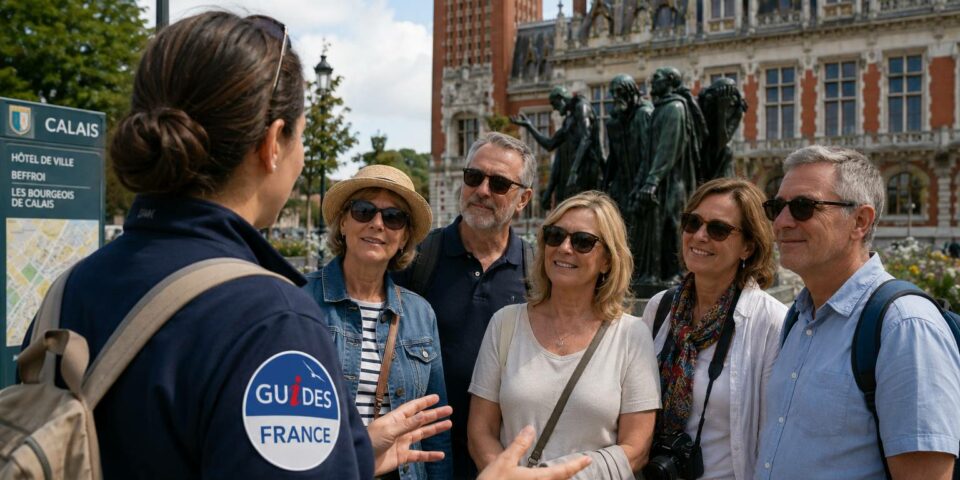
Standing in front of Calais Town Hall is one of the world’s most celebrated sculptures: The Burghers of Calais (Les Bourgeois de Calais) by the French sculptor Auguste Rodin. More than just a monument, it is a powerful work of art that tells the story of courage, sacrifice and the resilience of the people of Calais during one of the darkest moments in the city’s history.

The Story Behind the Sculpture

The sculpture commemorates an event that took place in 1347 during the Hundred Years’ War between England and France. After an exhausting 11-month siege, Calais was on the brink of starvation. King Edward III of England demanded that six of the city’s leading citizens surrender themselves to him, believing they would be executed in exchange for sparing the rest of the population.

According to the medieval chronicler Jean Froissart, six prominent townsmen volunteered to save their fellow citizens. They left the city barefoot, wearing simple shirts, with ropes around their necks and carrying the keys to Calais. Their leader was Eustache de Saint Pierre, joined by Jean d’Aire, Jacques and Pierre de Wissant, Andrieu d’Andres, and Jean de Fiennes.

As the story goes, King Edward intended to have them executed. However, his pregnant wife, Queen Philippa of Hainault, pleaded for mercy, arguing that killing them would bring shame upon the English crown. Edward reluctantly agreed, and the six men were spared.

Although historians debate some details of the story, the six burghers have become enduring symbols of civic courage and self-sacrifice.

Rodin's Revolutionary Design

In 1884, the city of Calais commissioned Auguste Rodin to create a monument honouring these six heroes. Rather than portraying them as triumphant figures standing proudly on a high pedestal, Rodin took a completely different approach.

He depicted the men at the very moment they leave the city, uncertain whether they are walking towards death. Each figure expresses a different emotion:

  • Eustache de Saint Pierre appears determined, carrying the keys of the city.
  • Jean d’Aire clutches the large keys tightly, accepting his fate.
  • Pierre de Wissant looks anxious and conflicted.
  • Jacques de Wissant seems to hesitate, torn between fear and duty.
  • Andrieu d’Andres buries his face in his hands in despair.
  • Jean de Fiennes, the youngest, stretches out his arm as though reluctantly moving forward.

Instead of celebrating victory, Rodin focused on the men’s humanity. Their expressions reveal fear, exhaustion, doubt and quiet bravery, making the sculpture remarkably modern for its time.

Why It's Worth Visiting

The Burghers of Calais is considered one of the greatest works of modern sculpture and one of Rodin’s masterpieces alongside The Thinker and The Kiss. While bronze casts of the sculpture can be found in cities including London, Paris, Copenhagen and Washington, D.C., the monument has a special significance in Calais, where the events it commemorates actually took place.

Leave a Reply

Your email address will not be published. Required fields are marked *

X